

For many years, when the country of Colombia was mentioned, the first thing that came to mind to was the Medellín cartel. Throughout the 1970s and '80s, until 1993, when he was killed, drug lord and narcoterrorist Pablo Escobar warred against anyone who got in his way.
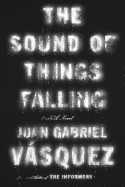
Juan Gabriel Vasquez uses this history as a backdrop in The Sound of Things Falling, as he tries to come to terms with years of drug-related violence that many Colombians would prefer to forget. For Vasquez and his narrator, young attorney and teacher Antonio Yammara, those bygone events were formative, leaving a legacy of fear.
The novel begins in 2009 with the killing of a hippo that escaped from what was the private zoo on Escobar's estate. When Yammara reads of this, he is besieged by memories of the mid-1990s, starting with a casual encounter in a Bogotá billiard parlor. Antonio develops a sort of friendship with Ricardo Laverde, despite his secretiveness; then, one day, Laverde is murdered on the street. Yammara, also wounded in the attack, is compelled to find out Laverde's story and, in the process, sees his own life fall apart. He discovers that Laverde was a pilot and drug trafficker, a mule for Escobar.
Yammara's obsession with Ricardo leads him to Maya Laverde, his 28-year-old daughter, who believed that her father was dead long before he was murdered. She, too, has been damaged by a past whose events she did not participate in. She and Antonio share this bond, one which challenges his shaky marriage.
Vasquez examines, eloquently, how memories can cripple and heal at the same time, how the past must be exorcised before a real future is viable. --Valerie Ryan