

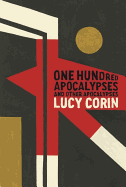
Post-apocalyptic fiction encompasses everything from high-action young adult novels like The Hunger Games to the bleak minimalism of Cormac McCarthy's The Road. These books rely on the idea that even after total destruction of life as we know it, something worth reading about might survive. This insistence on the possibility of survival also fuels Lucy Corin's One Hundred Apocalypses and Other Apocalypses. If an apocalypse doesn't have to destroy everything, Corin wonders, then what does it have to destroy? Can the quiet ending of childhood be an apocalypse? What about the death of a pet? What color are the hallways in the hotel at the end of the world?
The two most traditional stories in the collection, "Madmen" and "Godzilla vs. the Smog Monster," are also the strongest. Their science-fiction conceits serve as backdrops for Corin's pitch-perfect rendering of the young narrators' voices. "Eyes of the Dog," a dark, phantasmagorical fable, introduces the formal experimentation that continues throughout the rest of the collection. Although it is billed as a collection of short stories, One Hundred Apocalypses and Other Apocalypses is both more and less than that. Most of the "apocalypses" are under a page in length--portraits and musings more than short stories. Taken individually, they are obscure, delightful, disturbing--a pile of polished fragments from a facile wordsmith. Taken together, they are a challenge--a forceful if at times incoherent dismantling of traditional narrative in the service of thematic exploration. --Emma Page, intern at Shelf Awareness, bookseller at Island Books