

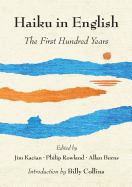
Haiku, the traditional Japanese art of a three-line poem with a 5-7-5 syllable structure has come a long way since Ezra Pound introduced readers of Poetry to the form a century ago. Though modern English-speaking haiku writers often forgo the traditional syllable and line count, the insistence on close, concrete observation of things as they are remains.
It's almost unfair to single out examples from the more than 800 poems in Haiku in English, as they are of uniform excellence, but here's one from Ruth Yarrow:
new leaf--
a tiny beetle chews a hole
to the sky.
And Roberta Beary:
all day long
i feel its weight
the unworn necklace.
John Crook offers a wonderful inversion of the cosmic and particular:
summer solstice--
the sun reaches a new place
on the fridge.
There are several other things to recommend this anthology beyond its generous sampling of poetry. Billy Collins's introduction is lucid, knowledgeable and concise; the 70-page overview by co-editor Jim Kacian is even better. Though it ranges from Pound to the Beats and on to modern times, his graceful and intellectually fecund survey is as empty of needless phrases as the poems it describes.
Haiku in English is an artful cornucopia of a book that carries a big thump of cultural relevance and keen-eyed observation, giving more than ample witness to a great poetic tradition. --Donald Powell, freelance writer