

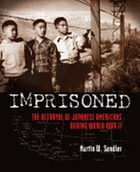
Pulitzer Prize nominee Martin Sandler (The Impossible Rescue; the Through the Lens series) does a masterful job of tackling a complex topic, as he puts it, "one of the darkest periods in American history": the treatment of Japanese-Americans living in the United States during World War II.
Sandler makes the case that the decision to intern more than 120,000 Japanese-Americans after the attack on Pearl Harbor was not based on any potential or realized threat, but rather on perception. Text and photographs illuminate the history of Japanese-Americans in the U.S., the hysteria after Pearl Harbor, their loss of property and dignity, the condition of the relocation camps, the dedication and success of Japanese-Americans in war efforts, and the government response to those who were imprisoned during the war. The author sharply contrasts the treatment of Japanese-Americans as disloyal with the fact that they were some of the greatest contributors to the country, in business and in war, including the role of Nisei (or American-born Japanese) in the 100th Battalion and the 442nd Regimental Combat Team, and, later, the 522nd Field Artillery, a special unit that helped liberate Jews and also parts of Europe from Hitler.
Despite the passage of the Civil Liberties Act of 1988 and President Obama's honoring of the Nisei with the Congressional Gold Medal, the impact of the relocation is still felt today. Sandler seamlessly weaves together the historical landscape and the impact that these Japanese-American felt then and now. --Susannah Richards, associate professor, Eastern Connecticut State University