

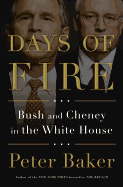
Peter Baker's Days of Fire revisits the eight years of the George W. Bush presidency to examine the inner dynamics of a White House in turmoil. Baker, the senior White House correspondent for the New York Times, has done his homework--his account is meticulously researched and buttressed by interviews with key figures from the administration as well as a treasure trove of declassified documents, internal memos and e-mails. (He also benefits from the willingness of several parties involved to speak freely now.)
Baker focuses on several themes he sees as key to interpreting Bush's presidency--prominent among them, his complex and unprecedented relationship with Vice President Dick Cheney and how everyone else interpreted that relationship. Baker deftly debunks many of the myths surrounding their arrangement. In his second term, for example, Bush gradually began to remove members of Cheney's inner circle from his foreign policy advisory council, and his views shifted into alignment with those of Condoleezza Rice's more internationalist, diplomatically focused approach. Cheney was no longer--as the myth goes--"pulling the strings."
Baker also portrays a dysfunctional national security apparatus marked by political infighting, countered by Bush's own dislike and avoidance of conflict and his desire to stand apart from his father's legacy. In all, Days of Fire is a magisterial panorama that manages to present very recent history with the urgency and drama of a political potboiler. --Benji Taylor, freelance writer, student, blogging at Destructive Anachronism