

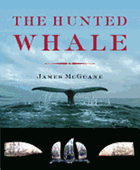
"The hunt is one of man's most ancient endeavors," begins The Hunted Whale. James McGuane's photographic exploration into the bygone practice of whaling transports the reader back in time, when whale oil lit the streetlights of the world's major cities and lubricated the burgeoning textile industry. Whaling was a significant economy unto itself, employing countless young men who were convinced to ship out for years at a time by employment agents known as "land sharks." It was a trade performed by hand, and McGuane looks at its many aspects: hunt, ship, whaleboat, crew, whale, tools and more.
McGuane's text is accompanied by more than 200 fine, detailed color photographs depicting whaling artifacts, including several examples of scrimshaw--the art of painted, engraved or carved whalebone or teeth. Photographs of twisted and mangled--but intact--harpoons give visceral evidence of the whale's power to resist human efforts, and McGuane details the methods in practice. Also showcased are innovative technologies, such as toggled harpoons or "irons."
Selections from Logbook for Grace, a diary kept by naturalist Robert Cushman Murphy aboard the whaleship Daisy in 1912, add a valuable firsthand perspective and bring McGuane's subject to life. With all its salty flavor, The Hunted Whale is an obvious choice for fans of Moby-Dick, but history or naval buffs and fans of pre-mechanized times will be equally charmed by this detailed pictorial view of the ancient industry of whaling. --Julia Jenkins, librarian and blogger at pagesofjulia