

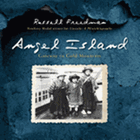
Russell Freedman (Lincoln) delves deeply into the layers of the former site of the immigration station located in San Francisco Bay, which served as the entry point for more than half a million people hoping to enter the United States from 1910 to 1940.
Many of those arriving at Angel Island had led sheltered lives and experienced it as a jail. "I had never seen such a prison-like place," said one woman. Freedman does not flinch from describing the barbed wire surrounding the barracks and the terrifying, dehumanizing medical examinations. The hospital had separate facilities for whites and Asians, and Asians were subject to "intensive" exams, conducted by doctors and nurses wearing white--the color worn at funerals in China. The vast majority of those arriving at Angel Island came from China, and Freedman devotes most of the book to the reasons for their immigration (first, the California Gold Rush; later, the Transcontinental Railroad), as well as the angry reactions of white Americans to their arrival (the Chinese Exclusion Act, which barred many Chinese from becoming naturalized citizens, was not repealed until 1943). He also includes stories from Japanese, Korean and Russian immigrants.
As the debate about immigration continues today in the U.S., Freedman's account demonstrates how deep and complex the issue's roots are. Readers may find it painful to learn of the wrongs committed at Angel Island, but Freedman's expert research and accessible writing come at the right time. --Allie Jane Bruce, children's librarian, Bank Street College of Education