

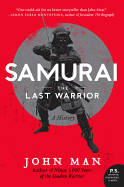
John Man combines travelogue, history and social commentary in Samurai: The Last Warrior, using the story of Saigo Takamori, popularly known as the "last samurai," as a central focus. In 1877, Saigo led a hopeless rebellion against the Japanese government. Armed with traditional sword and bow, 600 samurai fought the newly trained Japanese army in an effort to reverse the Westernizing changes of the Meiji Restoration. When all was lost, Saigo committed ritual suicide; the institution of the samurai died with him. Three years after Saigo's death, the government against which he rebelled erected a monument honoring him as a great patriot.
Man (Ninja: 1,000 Years of the Shadow Warrior) uses Saigo's story to consider the history of the samurai, Japan's rapid transformation from a feudal society to a modern one and the ways in which samurai culture continues to color Japanese society. He offers detailed explanations of both familiar elements of samurai culture, such as ritual suicide, and less familiar subjects, such as formalized sexual relationships between men. Man himself is never far from the page, whether comparing traditional samurai education with that of a British public schoolboy, visiting a class where a toned-down version of samurai-style sword fighting is taught, discussing the samurai in the context of other cultural ideals of honor or explaining Darth Vader's samurai roots.
Samurai is an engaging look at the final days of a military elite. --Pamela Toler, blogging at History in the Margins