

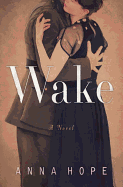
Anna Hope's debut novel, Wake, follows three English women over a span of five days in 1920, building toward the two-year anniversary of Armistice Day and the end of World War I.
Hettie, a dance instructor, is paid to twirl with strangers, many of whom are missing limbs. The festive hall where she works presents an interplay between light and dark, and Hettie's forays with a more fortunate friend to a breathtaking speakeasy emphasize class differences. Evelyn handles veterans' pension complaints, a thankless job that keeps fresh the wound left by her boyfriend's death in France. Asked every day to consider the fates of damaged young men, her bitterness grows. And Ada is nearly mad, haunted by her son's death, which has never been properly explained. When a young man appears on her doorstep and speaks her son's name, Ada is staggered; this event threatens to precipitate her descent into mental illness.
Woven among the three women's stories are brief views of military exhumation of unidentified bodies, candidates for the unknown soldier who will be reburied and honored on the anniversary of Armistice Day. Hope's strengths lie in nuance and atmosphere, as she gently and subtly reminds the reader of humanity under the worst of conditions. The pervading mood of the novel is reinforced by poverty, an inability to talk about past trauma and the presence of countless maimed and begging young men. As the lives of her three protagonists come together and the unknown soldier nears his final grave, Wake's deeply moving, ultimately universal story speaks evocatively across nearly a century. --Julia Jenkins, librarian and blogger at pagesofjulia