

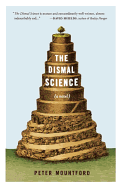
It was Thomas Carlyle who named economics the "dismal science," to get back at Malthus for his apocalyptic theories about the human race. Peter Mountford's The Dismal Science takes on a far more sympathetic economist--Vincenzo D'Orsi, a middle-aged vice-president at the World Bank--in a quiet, subtle novel that unfolds slowly, like a play, enveloping readers in its nuanced tale.
It's 2005. Vincenzo is successful, fairly rich, reasonably satisfied. A co-worker asks him to cut off funds to Bolivia, which is going through political turmoil. He disagrees with this policy; in fact, he's very upset, even defensive, about the request. He makes a rash decision to refuse, then tells a journalist friend about the incident. The story in the next day's Washington Post means Vincenzo's bridge is officially burned. Why did he do this? What will he do now?
Mountford's exploration of this good man's new road taken is a Dante-esque journey through Purgatory. Other characters, such as his daughter and the journalist who betrayed his confidence, along with the memories of his dead wife, swirl about, affecting him in different ways.
As in Ian McEwan's Atonement, Mountford shows how the repercussions of a single, small decision can slowly, deeply and truly change people. The Dismal Science is a classic novel of ideas for our time and our world of economics, wealth and greed. --Tom Lavoie, former publisher