

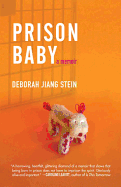
Deborah Jiang-Stein was one of very few adopted, multiracial children growing up in Seattle in the 1960s. Her Asian features stood out awkwardly in a family of Jewish intellectuals; her impulsive behavior baffled teachers. When she was 12, she discovered she was born in prison to a heroin-addicted mother before passing through foster care and arriving at her adoptive home.
In Prison Baby, Jiang-Stein recalls how her fractured identity and jilted childhood directed the course of her life. Despite the stability of her new home, she was drawn to drug use, crime and, most of all, an overwhelming sensation of anger. Not until much later did she manage to transmute this anger into activism and compassion.
Jiang-Stein's memoir is remarkable in that she combines the messiness of memory with a clinical understanding of her own condition. As an adult, she learns that the feelings that have gripped her throughout life have official definitions: post-traumatic stress disorder, dissociative amnesia, reactive attachment disorder. These insights not only illuminate her own behavior, they allow her to see herself in the context of millions of others affected by incarceration. Ultimately, it is through embracing this connection that she finds meaning.
Jiang-Stein has since founded the unPrison Project, a nonprofit devoted to empowering women and girls in prison. It has served more than 10,000 women, with the goal of someday reaching all 150,000 women in prisons across the United States. --Annie Atherton