

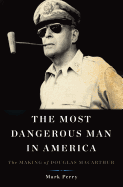
In 1932, then-presidential candidate Franklin D. Roosevelt called Douglas MacArthur the most dangerous man in America. Published almost exactly 50 years after MacArthur's death, The Most Dangerous Man in America is far less expansive than William Manchester's American Caesar. Instead, this partial biography stretches from MacArthur's tenure as the army's Chief of Staff (1930–35) to Japan's surrender aboard the U.S.S. Missouri, with only minor mentions of his World War I or Korean War experiences. Mark Perry (Partners in Command; Grant and Twain) follows the controversial general largely during his relationship with FDR, who sought to "tame" MacArthur into a useful political and military tool. The result is a compelling, succinct account of a deeply flawed but brilliant leader, a man seemingly created for the circumstances through which he lived.
The Most Dangerous Man in America revolves around MacArthur's lifelong love of the Philippines. His flight from the Philippines in 1942 is one of several controversial marks on MacArthur's legacy, which Perry skillfully deconstructs. MacArthur was ordered to leave after orchestrating an unexpectedly successful defense against impossible odds, and Perry further examines the general's blunders related to the campaign: MacArthur dodged responsibility for the failure to get his planes airborne prior to the Japanese attack on the Philippines, and he did not recant his singular "I shall return" promise. Through the whirlwind years of fighting that follow, Perry depicts MacArthur as vain and arrogant, but also a great leader of men. With fluid prose and fascinating personalities, The Most Dangerous Man in America should appeal to military history and biography buffs alike. --Tobias Mutter, freelance reviewer