

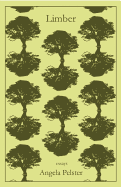
Like the roots of the trees Angela Pelster writes about--which at the time of their development "were an uncontainable force that drilled and crumbled the rock of the world"--these poetic essays on trees, humans and their interactions with nature are profound and beautiful. Pelster encourages the reader's imagination to stretch as she leaps among diverse subjects while still entwined with the life cycles of trees. We learn of the Tree That Owns Itself, a white oak legally deeded to itself by William Henry Jackson in the 1830s. In "Portrait of a Mango," Pelster draws connections among Johannes Vermeer's use of Indian yellow pigment in his paintings, which looks like the "flesh of a freshly sliced mango," mangoes themselves as "the fruit of paradise" and why the Buddha relinquished his possessions because of a barren mango tree. And though it was the only standing object for 400 kilometers, the Loneliest Tree in the World was hit by a truck; Pelster explores why a man built an arboreal statue to replace it.
Death, grief, pain, love and art mesh in the narratives: the lonely demise of a squirrel, a record made of the paper-thin slice of a tree trunk, the evocative and sexual shape of particular fruit. The complex web inexplicably and beautifully works. Mystical yet realistic, eccentric yet reflective, Pelster's ability to unearth the essence of nature is like the "first gasp in the world," a deep, oxygen-rich breath of the freshest air. --Lee E. Cart, freelance writer and book reviewer