

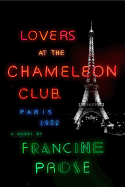
In Lovers at the Chameleon Club, Paris 1932, veteran novelist Francine Prose (Blue Angel) employs an array of voices and literary styles to tell a vibrant story of thwarted ambition, love and betrayal in prewar Paris and in the early years of World War II.
Prose's novel follows the life of Lou Villars, a cross-dressing lesbian "born into the wrong life," tracing her downward spiral from successful young athlete and racecar driver to German spy and torturer. While Lou's story is certainly an engaging thriller, through it Prose also delivers a thoughtful reflection on the "mystery of evil," as described by the sympathetic biographer whose account of Lou Villars's tragic life forms the novel's spine. Prose's expert touch renders each narrative voice distinct and vital: the biographer's chronicle of Lou; the collection of memoir excerpts; and the letters of the Hungarian-born photographer whose snapshot of Lou and her bisexual lover gives the novel its title. Taken together, this chorus provides the depth, shading and variety that flow from narrators with widely differing reliability.
Lovers at the Chameleon Club, Paris 1932 brims with colorful characters as artists (including, notably, Pablo Picasso), petty forgers, Nazis and resistance fighters meet on the page. Prose's careful attention to setting and period detail brings Paris and the chaotic World War II era to life. It would be unfair to pigeonhole this novel into a particular genre, because its appeal so artfully blends multiple styles. It is a testament to Prose's considerable talent that she's able to execute such an ambitious work so flawlessly. --Harvey Freedenberg, attorney and freelance reviewer