

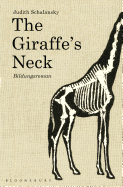
Like the titular animal in The Giraffe's Neck, Judith Schalansky's novel is strange and aberrant, difficult to compare to other works. It forgoes plot, opting instead for psychological evaluation. It abandons any attempt at the traditional narrative arc, and it might well be argued that, at the novel's close, protagonist Inge Lohmark is the very same character she was on page one. Still, for something so defiant of literary custom, this is a full and fruitful work, one that demands attention and deserves to be examined on its own dark, humorous, unconventional terms.
The focus barely strays from biology teacher Inge's consciousness; the close third-person perspective borders on claustrophobia. We follow her through the hallways of her German school, where she despises her peers and falls into scientific reveries, matched within the book by diagrams of jellyfish or the rings of a tree. From beginning to end, the central conflict lies in the middle-aged woman's animosity for the world at large: a festering, ever-present hatred that permeates her relationships with students as well as her marriage.
In its most fascinating moments, the novel is a reminder of the ever-present, contemporary legacy of the Berlin Wall. Inge's memories--dropped like breadcrumbs--are compelling clues that inform us of her development at a strange crossroads in history, pathologizing a character whose innermost thoughts are often still inscrutable.
The Giraffe's Neck is neither easy nor obvious--initially, it might even be jarring. But as the reader becomes enmeshed in Inge's thoughts, the experience challenges the parameters of what a novel can be. --Linnie Greene, freelance writer and bookseller at Flyleaf Books