

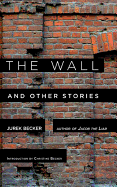
In The Odyssey, Homer equates storytelling with weaving: master storytellers stitch their works thread by thread, detail by detail, and the end result is a large, encompassing world. Holocaust survivor Jurek Becker's The Wall is a fine example of Homer's metaphor. While Becker (best known for Jacob the Liar) imagines a host of fantastical tales, the stories in The Wall are potent because they make the invented feel real, with lives established patiently, precisely, intricately.
The themes Becker addresses here are timeless and archetypal: loss of innocence, the incomprehensibility of the opposite sex, stories told (and secrets kept) within the web of a large family. The collection achieves a delicate balance between gravity and levity. Even within the confines of the concentration camp in "The Wall," young boys are brash and childish, more worried about a nighttime excursion than the daily realities that trouble their parents. The charismatic uncle in "The Most Popular Family Story" is remembered not for his death in the camps but for his tall tales. Of his uncle's horrifying disappearance, the young narrator writes only, "Once my father said, Gideon was a very old man when they took him to Majdanek, but still." The piece primarily occupies itself with the slapstick details of an awkward dinner party, but the reader is left with that barest hint of tragedy that colors the rest of the story.
It's this elliptical, allusive quality that gives The Wall its force. Loss settles onto these stories like a film of dust, but beneath those allusions are portraits of humans at their most human. --Linnie Greene, freelance writer and bookseller at Flyleaf Books