

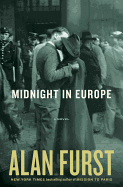
Sophistication and gentility once again travel hand-in-glove with ruthlessness and spying in Alan Furst's 13th historic espionage novel, Midnight in Europe. As readers expect from Furst (Mission to Paris; Spies of the Balkans), his characters stand against evil on a volatile international stage.
Furst writes like the consummate gentleman personified by his hero, Cristián Ferrar, a Spanish émigré living in Paris. It's December 1937, and as the novel opens, Cristián is in New York representing his French law firm. The newspapers are full of reports about the Spanish Civil War and the turmoil in Europe, foreshadowing darker days. Cristián returns to France and is recruited to help in the clandestine efforts to arm the Spanish Republic in its fight against fascism. Quickly we grow to like him, which heightens the tension as he agrees to broker an arms deal. "The world knows and all it does is watch," he says.
Passion for fighting fascists and Nazis does not preclude humor and pursuit of the good life--Django Reinhardt music and popping champagne corks cover the whispers of secrets exchanged. Cristián practices law, visits his family in the countryside and enjoys romantic liaisons, while readers wonder who can be trusted.
Trips on a Paris-to-Berlin night express, in a lumbering Buick bumping along Polish roads, in a stolen arms-laden train, and a heart-pounding voyage on a volatile Odessa-to-Valencia freighter drive the tension to the climax. Readers will be grateful that Furst rewards his hero's virtue with a satisfying conclusion. --Cheryl Krocker McKeon, manager, Book Passage, San Francisco