

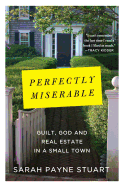
Sarah Payne Stuart's Perfectly Miserable is a literary memoir of real-estate lust, aspirational home ownership, the truth beneath the idyllic surface of a New England town and its iconic writers, and what it took to arrive at self-acceptance.
As a young woman, Stuart chafed against the restrictions of her hometown, Concord, Mass. She moved away, but eventually discovered she had an intense desire to return--drawn in by Concord's storybook perfection and her wish to give her children the idealized childhood she didn't have. Convinced that happiness was just one new and more desirable house away, she and her husband began a series of real-estate trade-ups.
Stuart's house mania is a brilliant pretext for exploring the true cost of social expectations in a WASP town where etiquette masquerades as prestige. Her mother in particular pays the price, but so do other members of the community, where long stays at a psychiatric hospital for the wealthy are routine. This is a world where people adamantly agree with one another, must look as if they have money yet care nothing for it, and are both emotionally and financially parsimonious. On a cultural level, Stuart shows the flawed people behind our airbrushed images of Emerson, Thoreau, Alcott and other literary giants from the area.
Stuart writes with a wry understanding of her younger insecure self and her excesses. It's this self-awareness that makes Stuart's memoir such a pleasure; we cheer her eventual self-acceptance and her widespread affection--for her family, her town, the writers of her youth, her younger self--in spite of imperfection. --Jeanette Zwart, freelance writer and reviewer