

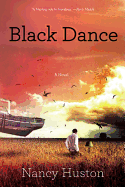
Milo Noirlac is a screenwriter dying of HIV/AIDS, and his partner (both professional and personal), film director Paul Schwartz, is at his side attempting to pull Milo's life story into one last screenplay. Black Dance. Paul's truncated version of Milo's family tree--only 14 names, though it covers four generations of Irish Catholic immigrants--adheres to "film's guiding principle--always follow one of the three main protagonists."
Milo's memory is dominated by his literary grandfather, who fled Ireland for Canada after the rebellion of 1916, leaving his colleagues "Jimmy" Joyce and "Willie" Yeats to become the pillars of Irish literature while he had to accept working on his wife's family's farm in Quebec and collecting books. Milo's father was a drunken petty thief, his mother a Waswanipi Cree prostitute. Shuttled among abusive foster parents, Milo finally broke free into the world of the arts. Careering from Montreal, Toronto and New York City to the wild bisexual hedonism of Brazil, he becomes obsessed with Rio's fight-dance capoeira scene.
With its cinematic structure--jump-cut scenes and earthy dialogue--the novel covers both 100 years of history and one family's personal legacy. But Paul's easygoing narration avoids the maudlin as he mines the memories of his dying lover and accepts that they are just "two old fogies whispering a screenplay at each other through an endless November night... if you take as your starting point that everything is unfathomable, and stick to it, you'll never be disappointed." Nancy Huston (Fault Lines) has a light but sure touch, and Black Dance rarely disappoints. --Bruce Jacobs, founding partner, Watermark Books & Cafe, Wichita, Kan.