

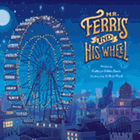
How do you top the star attraction of the 1889 World's Fair in Paris, the Eiffel Tower? That is the burning question for George Washington Gale Ferris Jr. in this picture book, which packs suspense and information in a story about the race to mount a showstopper for the 1893 Chicago World's Fair.
Ferris, an "ambitious" mechanical engineer based in Pittsburgh, had designed some of the U.S.'s biggest bridges and tunnels. When he presents his idea "for a structure that would dazzle and move" to the construction chief of the World's Fair, the man tells George his structure is "so flimsy it would collapse." Finally, with "no star attraction," and only four months to the fair's opening, the judges go with George's "far-fetched idea," but offer him no money to build it. Kathryn Gibbs Davis takes readers through "one of the most brutally cold winters" in Chicago history, as Ferris breaks ground and races against time to build his giant wheel.
Davis peppers the story with tantalizing facts: the workers hit solid ground at 35 feet down and lower a 70-ton axle into the ground. The structure measured 834 feet in circumference and rose 265 feet above the ground. It cost 50¢ per ride. Gilbert Ford's palette of predominantly reds, blues and purples evokes the freezing temperatures, and his artwork nicely balances the human and mechanical developments. The illustration of the riders rising up on "the Queen of the Midway," erupts into full color in celebration of their endless view. --Jennifer M. Brown, children's editor, Shelf Awareness