

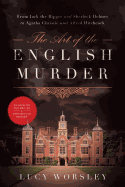
Those who haven't had the pleasure of watching BBC Four's entertaining history of English murder, A Very British Murder, narrated by the amiable Lucy Worsley (If Walls Could Talk) can now enjoy the material in print by reading The Art of English Murder, with Worsley as our wise, witty and sometimes delightfully wicked guide.
Her historical account covers two centuries of murder, mayhem and the writers whose detectives solved the cases. Worsley starts in 1827 with Thomas De Quincey's influential essay "On Murder Considered as One of the Fine Arts," which revealed the ways in which the grisly act can be both performance and entertainment. This led to the rise of sensational journalism, plays, murder-site tourism and the "whole body of detective fiction." The popularity of Madame Tussauds house of wax horrors in the 1840s demonstrated what the working classes wanted to do in their leisure time: "come face-to-face with murderers." If that wasn't possible, then they wanted to read about them.
Worsley's survey moves through several infamous 19th-century murder cases and then covers how great writers such as Charles Dickens and Wilkie Collins incorporated grim mysteries into their hugely popular works. By the 1930s, the murder rate had fallen to the lowest level Britain had ever seen, and yet, after World War I, the country experienced a "great explosion of fictional death by the novelists of the so-called 'Golden Age' of detective fiction."
Reading Worsley's simple, breezy prose is like sipping hot tea from a delicate British teacup: it takes little effort to digest the heartless criminals and their grisly crimes. --Tom Lavoie, former publisher