

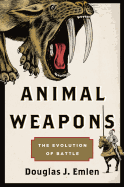
Sharper teeth, longer antlers, more exotic camouflage: the animal world has a history of "mine's bigger than yours" evolution. University of Montana biology professor Douglas J. Emlen distills 20 years of scientific research into an accessible narrative. Dramatically illustrated, Animal Weapons is a fascinating look at the extremes of animal appendages and behaviors. Whether focused on the fiddler crab's enormous claw or the rhinoceros beetle's lethal horns, Emlen tells stories of natural selection that rival Animal Planet's finest. Emlen's easy first-person narrative sets this study apart, as in the feeding of his laboratory dung beetles: "For six hundred sunrises I combed the damp understory collecting bags of monkey dung."
Emlen sees his findings as a metaphor for humanity's arms race. While big animal weapons are invaluable in the battle for reproduction and territory, they come at a cost. Large antlers inhibit speed and require precious resources to produce. Nourishment must first sustain the body's basic growth, and only when those needs are met can leftover nutrients fuel weapon production, so only the rich can afford a huge arsenal. Few countries can match the United States' investment in 10 Nimitz-class carrier strike groups, but the next round of relatively cheap, massively destructive cyber, nuclear and biological weapons may allow the less wealthy to push the U.S. out of the dominant position. Emlen makes a strong case that although the United States is "the biggest crab left on the beach," the entire planet is now at risk of weapons so dangerous they'll "change the stakes, and the logic, of battle." Evolution alone is probably not going to solve this. --Bruce Jacobs, founding partner Watermark Books & Cafe, Wichita, Kan.