

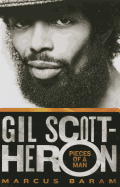
Politically active, musically eclectic, poetically in the tradition of Langston Hughes, and ultimately brought down by a Richard Pryor-like addiction to crack cocaine, Gil Scott-Heron was a social force throughout the last half of the 20th century who never achieved the big-money fame earned by several of his African-American contemporaries, many of whom appropriated his rap and percussion style.
Journalist Marcus Baram knew Scott-Heron and had access to the recollections of the musician's family, friends and bandmates, as well as those of the man himself. From this rich material, Scott-Heron's life becomes clear, starting with his tough childhood under the care of his grandmother Lillie. Scott-Heron worked his way into a tony New York prep school and eventually earned an MFA at Johns Hopkins. Along the way, he participated in campus protests against the Vietnam War and racial injustice and joined Washington's politically active Lost Poets writer colony.
His poem "The Revolution Will Not Be Televised" found its lyrics and title co-opted by nearly everyone with a revolutionary agenda, including Greek student protesters and even Nike's advertising department. It was music that most engaged him and touched the widest audience. His enduring songs "The Bottle" and "Johannesburg" cracked the Billboard charts and led to financially rewarding recording contracts.
For a while, Scott-Heron was riding a rising tide, upgrading his mother's Bronx apartment and finding easy access to the coke and drugs that fueled the music industry. It was the latter that did him in. Missed gigs, drug busts, jail time, rehab... it's a well-trod path. Baram tells it all. --Bruce Jacobs, founding partner Watermark Books & Cafe, Wichita, Kan.