

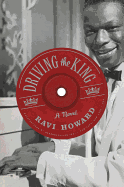
Smooth and easy, Nat King Cole's baritone captivated listeners of all races when he began performing at jazz clubs as a teenager in the 1930s. By the mid-1950s, Cole was a star, and though he was living in Los Angeles, he returned to his home state of Alabama to play a sold-out concert. During the show, Cole was assaulted on stage by three white men. In his second novel, Driving the King, Ravi Howard uses that incident as inspiration, imagining what might have happened afterwards.
Howard (Like Trees, Walking) creates a vivid fictional narrator in the person of Cole's childhood friend Nat Weary. Recently returned from fighting in World War II, Weary comes to Cole's show with his girlfriend, planning to propose to her while Cole serenades them. When Cole's attackers rush the stage, Weary leaps from the "colored" balcony to protect his old friend and is sentenced to 10 years in prison. Just before his time is up, Weary gets a message: the singer wants Weary to come to Los Angeles and work as his driver and de facto bodyguard.
Howard's narrative cuts back and forth in time, beginning with Cole and Weary's return to Montgomery for another show in 1956 and unfolding in a series of flashbacks. Weary's voice rides as smoothly as the pristine Packard he drives for Cole, mixing straightforward talk and folksy metaphors that never veer into cliché. Howard weaves Weary's life story into the narrative of the civil rights movement. As Weary builds a new life for himself in L.A. and Cole struggles to keep his TV show on the air without sponsors, both men must deal with the frustrating reality of being black and male (albeit educated and gainfully employed) in the era of Jim Crow. Powerful but understated, Driving the King resembles the top-shelf liquor Weary prefers: smooth and rich with a surprising bite. --Katie Noah Gibson, blogger at Cakes, Tea and Dreams