

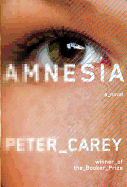
In Amnesia, Peter Carey (The True History of the Kelly Gang) plumbs the fractured political past of his homeland, Australia, to tell a story of identity in the 21st century. Beginning with the controversial Constitutional Crisis of 1975, Carey examines political lethargy in modern Australian life and those who seek to upend the status quo. As members of opposing generations, hacker Gaby Baillieux and journalist Felix Moore react to the corruption of their government in vastly different ways. But when Gaby hacks the United States' prison system and Felix begins to write a book about her, their lives and families are threatened by the powers they aim to undermine.
Amnesia accomplishes the remarkable task of being a family drama, a brief history of hacking in the late 20th century, and an exposé on Australian politics post-1975. Beginning in the present day, Carey jumps backward, uncovering a series of personal conflicts in Gaby's life that led to her cyber-attack. As the political and personal begin to meld, he expertly shows the crushing weight of large-scale institutions on people, both with power and without. Even with Amnesia's rather philosophical considerations, the book remains propulsive, its narrative gripping as the tension mounts for Gaby, Felix and their families. While Carey never lauds Gaby's illegal activities or Felix's unscrupulous muckraking, he forcefully portrays the Australian government, and its populace, as idle in the face of genuine assaults on freedom. Amnesia means to instigate and outrage, and it is hugely successful at both. --Noah Cruickshank, marketing manager, Open Books, Chicago, Ill.