

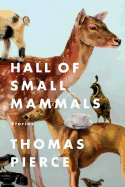
There are writers content to mine existing human experiences, and then there are writers who populate their stories with miniature mammoths and parallel dream-universes. Thomas Pierce, whose work has appeared in the New Yorker and the Atlantic, certainly fits into the latter category. To call the stories in Hall of Small Mammals magical would be like comparing a sleight-of-hand trick to the parting of the Red Sea--these stories don't just incorporate magic. They're infused with it.
While the overt fantasy in pieces like "Shirley Temple Three" (which features the aforementioned mammoth, resurrected via cloning) adds an interesting wrinkle to his characters' conflicts, Pierce's best stories are those that feature a subtler brand of alchemy, one that imbues normal, human relationships with the rosy glow of the magical. "Felix Not Arriving," which follows a comedian on a trip to his baby's mother's wedding, tugs at the heartstrings like any difficult, truthful thing, uncovered and laid bare. Felix's love for his child and the child's mother is mitigated only by his own inability to grow up, but even as he fails, repeatedly, to rise to the occasion, Pierce peppers the story with talismans and fantasies: a message scratched into a tree house; a pair of footie pajamas that make his child look like a rumpled superhero; the persistent hope that maybe, this time, he'll change.
The real magic is in the collection's exploration of people of all sorts, be they quotidian or fantastical, a dogged optimism that even mid-level comics or retirees can tap the wells of their inner lives and return surprised or startled at what's there. Beneath the whimsical is the truthful, and it packs a prodigious punch. --Linnie Greene, freelance writer