

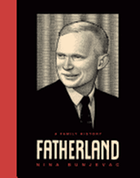
In her graphic memoir, Fatherland: A Family History, Serbian-Canadian artist Nina Bunjevac tells the blood-soaked history of the former state of Yugoslavia through the lens of one family's story.
Fatherland centers on Bunjevac's father, whose involvement in Serbian terrorist organization located in Canada led her mother to flee with her daughters to Yugoslavia in 1975 and ended with his death in a bomb explosion. Moving back and forth in time and place, from modern Toronto to Yugoslavia during both the Nazi occupation and the Cold War, Bunjevac explores the steps that led to her father's extreme nationalism and its tragic consequences. Using a combination of strong lines, pointillism and cross-hatching that evokes the feeling of an old newspaper, she tells a story in which there are no heroes and every choice, personal or political, has traumatic consequences. (Bunjevac's mother is forced to make a classic "Sophie's choice": the only way she can take her daughters to Yugoslavia is to leave her son behind.) Both the country and Bunjevac's family are torn apart by the bitter divisions between Serbs and Croats, partisans and collaborators, royalists and communists.
Bunjevac makes no moral judgments about her family's choices. Instead she approaches their history from several viewpoints, introducing increasing complexity and moral ambiguity with each new layer. The only thing that is black and white in Fatherland is Bunjevac's exquisite and often grim illustrations.
Fatherland is powerful visual storytelling that will appeal to fans of Marjane Satrapi's Persepolis and Joe Sacco's Palestine. --Pamela Toler, blogging at History in the Margins