

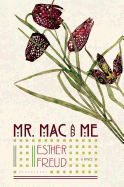
Esther Freud's ninth novel, Mr. Mac and Me, is a sensitive coming-of-age story and a clear-eyed, sympathetic look at everyday life in a small English coastal village in 1914. Freud (Hideous Kinky) took inspiration from a historical episode concerning a real-life artist and her home in Suffolk.
Thomas Maggs, son of a pub owner, is an imaginative boy whose sketches fill the margins of his books. He befriends the Macs, the Glaswegians who have taken a cottage nearby, and they open a new world for him. Mr. Mac is Charles Rennie Macintosh, a famed architect suffering through a period of self-doubt and professional setbacks. He and Mrs. Mac encourage Thomas to paint. They lend him books, some in German, and they write letters, some to people in Germany, which Thomas posts after steaming them open to read--he's curious about these strangers and their very different lives. Meanwhile, the war takes the young village men, and locals whisper that Mac must be a spy, given his German correspondence and daily walks, spyglasses in hand.
Thomas is brilliantly drawn on the cusp of maturity, loyal to home yet yearning for adventure, torn between the Macs and his fear that suspicions might be true. Freud is also deft at conveying how the terror of war recedes behind the urgent desires of boyhood. While the novel's conclusion feels under-realized as Freud rushes Tom into adulthood, Mr. Mac and Me is a wonderful, layered novel and a tribute to an iconic architect told by a boy in the historical moment and at the age that everything changes. --Jeanette Zwart, freelance writer and reviewer