

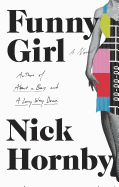
In his novels, Nick Hornby (About a Boy) has demonstrated a keen talent for warmhearted portrayals of flawed but ultimately sympathetic characters. Funny Girl, the story of a reluctant beauty queen who becomes an unlikely BBC sitcom star in mid-1960s London, shares the same delightful literary DNA.
From the moment Barbara Parker renounces the crown of Miss Blackpool and heads south to London in pursuit of her ambition to become the British Lucille Ball, it's clear there is something special about her. The theatrical agent who discovers her and wants to turn her into a swimsuit model is quickly disappointed when Barbara improbably finds herself a leading role on a television comedy that focuses on the domestic life of a young housewife and her husband, an employee of Prime Minister Harold Wilson.
Her show is entitled Barbara (and Jim), the parentheses a not so subtle statement about nascent feminism and the impetus for one of the story's many sharp comic scenes. The novel's plot traces the TV show's steadily growing popularity over several seasons (alongside the tensions that creates in Sophie's personal life), as it deals more frankly with sexual and gender issues.
Hornby's genial temperament and accessible style make it easy to become engrossed in the emotional lives of Sophie and her colleagues. As much as Funny Girl provides an entertaining glimpse inside the world of television and of a society at a time of ferment that will leave it forever changed, it's a timeless, winning portrait of a young woman striving to realize her life's dream. --Harvey Freedenberg, attorney and freelance reviewer