

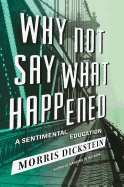
Distinguished cultural critic Morris Dickstein (Dancing in the Dark) has written a lively, impressionistic account of the intellectual and personal transformation of a "brash Jewish kid from New York" that paralleled the U.S.'s emergence from the torpor of the 1950s into the political and cultural explosion of the following decade. Why Not Say What Happened intertwines these two narrative threads to create this engaging story of "an education of the feelings as well as the mind."
In vivid and entertaining prose, Dickstein describes his educational journey as he moved from his undergraduate years at Columbia College and on to Yale, where he obtained a Ph.D. in English literature. Dickstein had the good fortune to experience his scholarly coming of age under the tutelage of intellectuals like Lionel Trilling and Harold Bloom. His anecdotes about these and other figures (Susan Sontag; the great British critic F.R. Leavis) invigorate the memoir.
More than anything, being a participant in the societal ferment of the 1960s propelled Dickstein's desire to be "part of the cultural conversation about the changes in modern life" instead of settling for a life of quietude, teaching and writing about his specialty, English Romantic poetry. Whether he's describing his sexual initiation in the company of the woman who would become his wife, his struggle to maintain his fraying connection to his Orthodox upbringing by his refusal to abandon Jewish dietary laws or his passionate engagement with Keats's poetry, Dickstein shows why his talent would have been only half-realized had he chosen the cloistered life. --Harvey Freedenberg, attorney and freelance reviewer