

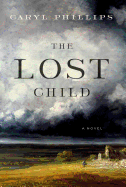
In The Lost Child, internationally acclaimed novelist and essayist Caryl Phillips (Color Me English) uses Emily Brontë's Wuthering Heights as a reference point for his multi-generational story of a family, from their roots in West Indian slavery to the fractured promise of their lives in contemporary England. It's a powerful and bittersweet work of the imagination that touches on Phillips's familiar themes of belonging and exile.
Like Cathy Earnshaw, Monica Johnson has a difficult relationship with her parents. Growing up in the late 1950s, she rebels against the pretensions of her bourgeois father. At Oxford, she meets and marries a fellow student; when the marriage fails, he returns to his native West Indies without her. Estranged from her family, lonely and impoverished and increasingly self-destructive, Monica raises their two sons in council housing while slipping slowly into mental illness.
Interspersed with Monica's story are those of Tommy and Ben, her two neglected boys whose dark skin recalls Heathcliff's and further marks them as different. And in a long interlude in the middle of the novel, a feverish Emily Brontë slips between a dreamlike past--unable to prevent her brother Branwell's decline and ruin--and her increasingly hallucinatory present in Charlotte's sisterly care.
The Lost Child brilliantly intersects the lives of the Johnsons with the fictionalized Brontë family, using Wuthering Heights as the catalyst for a highly original story with devastating resonance. --Jeanette Zwart, freelance writer and reviewer