

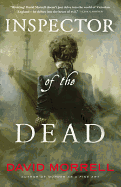
Prolific author David Morrell tried something new when he wrote a period mystery, Murder as a Fine Art, in which the famous, opium-eating Victorian author Thomas De Quincey starred as the detective. His second installment in the series, Inspector of the Dead, is another winner.
It's 1855, one year after De Quincey's detective debut. The Crimean War is in its second year and has caused major shakeups in the British government. Out of an early London evening's fog emerges a man who sneaks into Lord Cosgrove's home--"clutching his cane, he proceeded with his great work. Memories needed to be prodded. Punishment needed to be inflicted." He murders the staff and then Cosgrove himself--strangling the lord in his library, leaving tapered silver pens protruding from each eye.
Later, Lady Cosgrove is brazenly murdered in her personal pew at St. James's Church, her throat slit from ear to ear. The only thing that links the brazen murders is a piece of paper bearing the name Edward Oxford, clutched by each corpse. De Quincey suspects that the "motive was revenge for an injustice." In 1840, there had been an assassination attempt on the life of Queen Victoria made by Edward Oxford, a man involved with the underground organization Young England, which aimed to abolish the monarchy.
De Quincy and his team soon deal with more vicious murders by this mysterious serial killer, and Morrell provides enough information about him, his unfortunate background and his motives to add depth to the story. It's a rich thriller, told with exquisite detail, amidst a moody, pervading tone of gloom. --Tom Lavoie, former publisher