

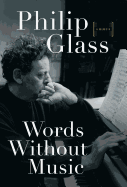
American composer Philip Glass is best known as one of the founders of minimalism in music, but his reach extends widely. He's scored countless films and operas, and provided a lexicon of sound for artists working at the forefront of electronic and ambient music. With such a litany of accomplishments, one might expect his memoir, Words Without Music, to come across as self-congratulatory. Glass does recount his achievements, but his frank, personable writing style makes the book a joy to read.
Words Without Music tracks Glass's musical training, beginning with his childhood in Baltimore, through his time working odd jobs to survive, finally arriving at his mid-life success. Glass's intellectual maturity came, he writes, in part from a range of interests he delved into, particularly while at the University of Chicago and among the New York avant-garde. He also provides explanations of his landmark compositions in a way that makes it clear to the layperson. Since Glass's output over his career has been remarkable, he unfortunately does not cover everything a die-hard fan might want to read about (most notably his symphonies and his 1982 album Glassworks). But, considering the insight he provides into the various works he does discuss (particularly the operas and early minimalist pieces), anyone with a passing interest in Glass will come away with a better understanding of this musical giant's creative process and influence. --Noah Cruickshank, marketing manager, Open Books, Chicago, Ill.