

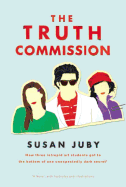
When they observe the healing powers of truth-telling, Susan Juby's (Alice, I Think) funny, smart 16-year-old narrator and her two best friends decide to form a Truth Commission.
Normandy Pale is writing this book as a work of creative nonfiction for her spring project junior year. Her author's note describes her anticipation of writing her acknowledgments: "It's going to be like writing an Academy Awards speech for an award that I gave to myself!" By footnote number 11, Norm admits that she and her friends would have been better off sticking to the time-honored concept of the "truth and reconciliation commission."
Her statement foreshadows many situations that at first seem like successful truth-seeking but have unintended consequences. Norm nearly loses Dusk and Neil's friendship because she has not yet sought truth from anyone. But she's withholding from them her graphic novel artist sister's confession to Norm: that she crossed a line with a teacher at college. When Norm finally does approach her first "subject," he turns the questions back to her: "You might want to start a little closer to home." A standout exchange occurs when Norm tells Mr. Thomas, "Asking people the truth is a spiritual practice." He responds, "I thought that spiritual practice involved asking yourself the truth."
Juby beautifully frames the questions at the heart of adolescence. When do you want to know the truth and when is it too much? How much do you present to the world and how much do you keep for yourself? --Jennifer M. Brown, children's editor, Shelf Awareness