

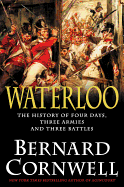
Historical novelist Bernard Cornwell, author of the popular Richard Sharpe and Saxon Tales series as well as numerous standalone novels, makes his first foray into nonfiction with Waterloo: The History of Four Days, Three Armies and Three Battles.
Published in time for the Battle of Waterloo's 200th anniversary, Cornwell's account features the powerful storytelling and carefully chosen details that characterize his fiction. Although he emphasizes that confusion is inherent to battle, he presents the confusion experienced on the field at Waterloo to his readers with utter clarity. He rests his story on the viewpoints of individuals present at each stage of the battle, including Napoleon and Wellington, using letters, journals and memoirs by ordinary soldiers and officers from all three armies engaged on the field. Each chapter opens with a useful map of the action discussed--a luxury military history buffs will appreciate.
Cornwell begins the book with the question "Why another book on Waterloo?" Others may ask, "Why another book by Cornwell on Waterloo?" (He explored the subject previously in the novel Sharpe's Waterloo.) The answer lies in the writing. It is true that Cornwell's Waterloo is not a work of innovative scholarship--it doesn't present new insights or use new materials. Instead, it is a splendid example of historical narrative, as Cornwell himself describes the book at the end of his foreword: "So here it is again, the story of a battle." And a gripping story at that. --Pamela Toler, blogging at History in the Margins