

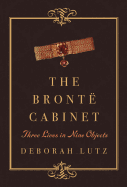
Deborah Lutz's (Pleasure Bound) fresh and novel The Brontë Cabinet examines in detail nine objects owned and used by the Brontës--Emily, Charlotte and Anne--in order to reveal the "secret existence" the possessions held for them and how they influenced the sisters' writings. Lutz places each object "in its cultural setting and in the moments of the everyday lives of the Brontës."
The intriguingly titled chapter "The Alchemy of Desks" is about the sisters' portable writing desks, covered with ink stains. Emily called hers a desk box; inside it were pieces of chalk, fragments of lace, an empty cardboard box marked with her initials, EJB. Each leftover, "no matter how enigmatic and insignificant, seems to shine out with meaning." In "Tiny Books," Lutz discusses the books the sisters created as teenagers by folding pieces of paper and sewing them together to form "a rudimentary booklet of 16 pages, about the size of a matchbook," that they filled with words written in the tiniest of scripts. In addition to numerous household duties, the sisters spent hours dealing with the "swatches and cloth fragments they stitched, turned and hemmed." Lutz sees their products as "physical monuments to the business of their days," during which they could mentally compose their poems and novels.
Reading this sensitive inquiry into the Brontë's objects, and the family members who were so very close to them, allows the many who love the sisters' writings to partake, even if from afar, in the special lives of these fascinating and brilliant women. It's literary archeology par excellence. --Tom Lavoie, former publisher