

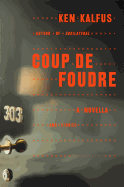
In the opening novella of Ken Kalfus's third book of short fiction, Coup de Foudre, an international banker writes an incriminating e-mail to his illiterate rape victim. In events that play out much the way they did during the real-life Dominique Strauss-Kahn controversy, the hubristic narrator escapes conviction but, in Kalfus's imagination, cannot quiet the troubling voices in his head.
The stories that follow explore the world through the eyes of similarly troubled people, but because of the magical and twisted realities in which they live, consequences are never quite as dire as they should be. A town cursed with the knowledge of when each citizen will die submits to its fate. A man inexplicably unable to rise from a park bench wonders whether it's the bench or his own mind that's imprisoned him.
The title of the collection translates literally to "bolt of lightning," but the phrase is a French idiom that means "love at first sight." It's an expression Kalfus's narrator in the novella uses to explain how he loves, "without the oversignificant looks and the lame jokes, in a sudden strike, a jump, a rage--a coup de foudre...."
Kalfus's stories tend to roll in like thunder, rather than flash like lightning. The stories are separate and distinct but together they create a pensive and wistful atmosphere. Kalfus (Equilateral) blends science and philosophy to create whimsical, off-kilter worlds only slightly different from our own and in which entire universes are born--slanted but familiar. --Josh Potter