

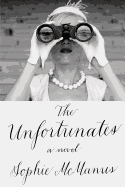
One doesn't have to respect a book's principal characters to appreciate the story. In Sophie McManus's admirable first novel, The Unfortunates, the pettiness of the privileged and their sense of entitlement take center stage.
In her late 70s, overbearing philanthropist matriarch CeCe Somner suffers from a degenerative disease that threatens her micro-management of the fund-raising social events that once filled her calendar. Her illness prompts her stay at the tony Institute for Clinical Research campus, where she berates nurses and doctors while desperately hoping an experimental treatment will slow her disease's pace.
Her son, George, however, has been under her critical thumb for so long and is so dependent on her deliberately limited financial support that, in her absence, he barely manages an undemanding foundation job, where he idly scribbles at what he believes is a breakthrough modern opera. In debt and hounded by bill collectors, George's wife, Iris, sells their Somner heirloom jewelry and antiques, and invests their meager savings with George's former classmate's private equity fund--just before it is charged with securities fraud. It would appear that this financially fortunate family's follies turn them into "unfortunates" indeed.
But McManus knows the wealthy well. When the Somner backs are to the wall, their money salves a lot of wounds. The Unfortunates is an irresistible novel about old money and the sometimes wayward, sometimes admirable behavior of those who have it. The Somners are an upsetting lot, but as Iris says about a disturbingly graphic novel she is trying to read: "It's a book. The more upsetting the better." --Bruce Jacobs, founding partner, Watermark Books & Cafe, Wichita, Kan.