

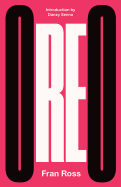
In Fran Ross's novel Oreo, a multiracial girl who calls herself Oreo leaves her black maternal family to go in search of her white, Jewish father. The story, a modern version of the tale of Theseus, follows a meandering but hopeful thread, like the Greek hero famously did through the labyrinth to defeat the Minotaur.
First published in 1974, Oreo is a racially charged, feminist story. For this new edition, Danzy Senna writes in the introduction that Ross may have been ahead of her time, her dark comedy and complex characters overshadowed by the sensation that surrounded Alex Haley's publication of Roots. Revived now, when the racial, gender and political landscape is shifting, Oreo masterfully depicts how absurd it is to maintain traditional cultural beliefs.
Like the labyrinth in Greek myth, the novel's trajectory is not forward or backward, but instead is layered, dynamic and always self-referential. Like Theseus, readers are given a line to follow throughout: they can cling to Oreo's distinctive voice. When a gypsy reads Oreo's palm and predicts that she will have three kids with a basketball player, Oreo's reaction is sharp. "This was a stone lie," she thinks. "Amaze the Amazons, perhaps--but live happily ever after with some jive guard and three crumb snatchers? Foul!"
Theseus was promised rewards and glory for slaying the Minotaur. But Oreo's labyrinth is a tangle of gender, racial and social stereotypes. Her father, a deadbeat absentee dad, promises nothing. She makes her way through the labyrinth for herself, no one else. --Josh Potter