

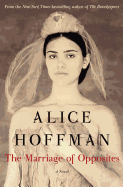
An innovator of Impressionism, Camille Pissarro is closely associated with France and the seminal artistic movement he helped inspire there. His start in life and in painting, though, happened a world away, on the Caribbean island of St. Thomas, where he studied "waves, sand, birds, light" and dreamed in shades of blue.
In The Marriage of Opposites, Alice Hoffman unfolds the intriguing story of Pissarro's beginnings. She adeptly and beautifully imagines the tempestuous life of the artist's mother, Rachel Pomié, who defied convention for passion, and how his formative years on the island influenced him personally and professionally.
The sultry St. Thomas that Hoffman describes is a singular place with jasmine-scented air, gritty, bustling wharves, houses built on stilts and accented with brightly hued shutters, pink bougainvillea climbing stucco walls and parrots perched in tamarind trees. But even on this "small speck of land" suspended in the sea, written and unwritten rules govern people's behavior.
Hoffman's fans and those of historical fiction in general will savor The Marriage of Opposites, a vividly rendered account of how one woman's refusal to deny true love ultimately helped lead to an artistic revolution. When Pissarro first realizes his talent, he feels as if he has "come upon the core of the meaning of life, to discover and re-create beauty." While he created with paint and brush, Hoffman's medium is words. The Marriage of Opposites is a story as sublime as an Impressionist painting. --Shannon McKenna Schmidt