

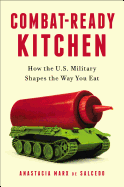
Most people, including food writer Anastacia Marx de Salcedo, have had no idea that innovations such as the tin can, dry yeast and crackers were invented to feed soldiers at war. She opens Combat-Ready Kitchen with her realization that the contents of school children's lunchboxes bear a strong resemblance to what's served to special operations soldiers. From there, she takes a journey into the origins and science behind prepared foods.
Feeding hundreds of thousands of soldiers at war presents a particular set of problems. When soldiers are deployed in places of extreme heat or cold, and are on the move, solving logistical challenges of what and how to eat can determine the outcome of war. Small groups of warriors could raid and pillage to survive, but large-scale military campaigns require innovations such as cured meats, hard cheese and hardtack (dry crackers) to feed troops. The processed food on store shelves today is a modern extension of these innovations.
While Marx de Salcedo recognizes that making restructured meat appetizing and the chemical mix that keeps bread fresh for as long as possible are great inventions that have resulted in cheap, shelf-stable consumables, she also sees the ways in which heavily processed foods have not been good for public health. Welcome as their technological advances may be, she observes, the military cannot be the sole director of food innovation. At a time when social movements encourage people to eat locally and sustainably, Anastacia Marx de Salcedo offers an informed and scientific perspective on the origins, science and importance of prepared foods. --Justus Joseph, bookseller at Elliott Bay Book Company