

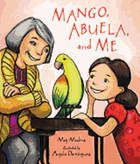
Meg Medina's (Tía Isa Wants a Car) elegantly crafted picture book traces young Mia's desire to communicate with her Spanish-speaking grandmother, and her perseverance in surmounting their language barrier.
Angela Dominguez's (Maria Had a Little Llama) warm, emotionally understated artwork fills in the parts of the story that go unsaid. Abuela's expression reflects her sorrow at leaving "her sunny house that rested between two snaking rivers," where parrots nested in mango trees, and where her husband died. The narrative unfolds through Mia's eyes, as she and her mother make space in her room for Abuela. At first, neither child nor grandmother knows enough of each other's language to converse. Abuela shows Mia a red parrot's feather and a photo of tu abuelo, reminders of the home she left behind. But then Mia remembers that her teacher helped her best friend, Kim, learn English by labeling things. Mia begins by naming the ingredients that go into the empanadas she and Abuela are making, and is soon placing word cards on the lamp, pillow, flowers--even on Edmund the hamster. Abuela "still calls my pillow a 'palo' and she says Edmund is a 'gángster,' " says Mia. But in time, each teaches the other enough words to carry on a conversation. And when Mia finds a parrot in the pet store while buying food for Edmund, the bird (which she and Abuela name Mango) joins the family--and their words--in pleasing mimicry of their newfound vocabulary.
This uplifting and affirming tale makes clear that connecting with someone sometimes takes work and ingenuity, but the payoff is priceless. --Jennifer M. Brown, children's editor emeritus, Shelf Awareness