

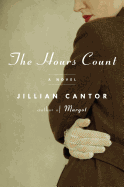
In Margot, Jillian Cantor invented an alternate life for Margot Frank, the older sister of Anne Frank, in Philadelphia after surviving Auschwitz. In The Hours Count, Cantor reimagines the last years of Julius and Ethel Rosenberg, the only civilians ever executed in the United States for treason and conspiracy to commit espionage, on June 19, 1953.
The Rosenbergs' story shifts between Ethel's execution day and the six intervening years from 1947, told sympathetically through the eyes of fictional neighbor Mildred "Millie" Stein, a lonely, naïve housewife who has moved with her family--an autistic son, David, over whom she dotes, and her secretive and inattentive Russian immigrant husband, Ed--into Knickerbocker Village. She meets a pregnant Ethel on the way home from the playground, and the two soon bond over their shared isolation and raising special needs children. When the Rosenbergs throw a party to introduce the Steins to their social circle, Millie meets and befriends a psychotherapist named Jake Gold, who takes an unusual interest in David and, subsequently, Millie. She finds herself falling deep into an affair and deeper into the political intrigue building up around her, not knowing whom to trust and putting her children's lives in danger.
Although she never states it, Cantor strongly hints at Ethel's innocence based on case files she has studied and from letters that Ethel wrote to her sons while imprisoned. The maternal personality expressed by the letters forms the basis of Millie's relationship with Ethel. Ultimately, Cantor views Ethel as a woman guilty by association, the victim of the nation's growing paranoia and fear over the Cold War. --Nancy Powell, freelance writer and technical consultant