

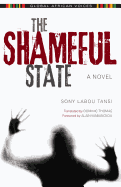
One part madcap farce, one part chamber of horrors, one part modernist look at the jumbling of political, national and personal narratives, Sony Labou Tansi's The Shameful State is purposeful chaos. The Congolese writer is known for his powerful political novels, and he uses depravity as a cudgel, showing how absolute power creates seething, merciless creatures who demand ownership of every person and thing within their grasp. Faced with the corruption in The Shameful State, it's hard to know whether to cry or laugh.
Dominating the book is Colonel Martillimi Lopez, a man who becomes president of an undisclosed African country and proceeds to rape and pillage, pushing aside both rebellion and conspiracies amid his own government. As if to show Lopez's complete control, the third-person narration in The Shameful State sometimes shifts suddenly to first, with Lopez now speaking on behalf of the story. In other places, the narrator speaks with the voice of the people, or as the personification of the country itself.
The book rushes from one outlandish situation to the next, usually involving bloodshed and murder. The Shameful State is not for the faint of heart (for example, Lopez and the narrator continually refer to his penis as "my hernia," as if it is so engorged as to be a symbol in and of itself), but it's clear from the gonzo tone throughout the book that Tansi isn't interested in depravity for its own sake. Like the work of William S. Burroughs, The Shameful State exists beyond the scope of normal narrative, forcing the reader to confront evil in its purest absurd form. --Noah Cruickshank, marketing manager, Open Books, Chicago, Ill.