

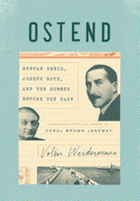
Volker Weidermann's Ostend: Stefan Zweig, Joseph Roth, and the Summer Before the Dark is a glimmering work of language and an insightful tribute to literary friendship in a singular historical moment.
Stefan Zweig was a successful and popular Austrian writer; Joseph Roth was less successful but also gifted, a tortured, heavy-drinking writer whom Zweig called his "literary conscience." When war loomed in the summer of 1936, Zweig returned to the Belgian seaside town of Ostend, where he had spent the summer of 1914. His work no longer welcome in Germany, his home in Salzburg defiled by police and his marriage collapsed, he nonetheless joyfully embarked on new work and new love with his secretary, Lotte Altmann. And he brought along Roth, supporting him financially and in his work (support that would strain their complex, fraternal relationship throughout). The troubled Roth, too, found new and rejuvenating love with a German writer, Irmgard Keun, one of the few non-Jews in their small émigré community.
Aside from brief background and epilogue, Weidermann stays within the boundaries of the summer of 1936--the summer before the dark, in which Zweig, Roth and an assortment of "detractors... fighters... cynics... drinkers... blowhards... silent onlookers" manage for a single season to love, laugh and exercise creative genius in a world rapidly falling into war and fascism. Translated from the German into lyrical, meditative prose by Carol Brown Janeway, Ostend is a brief but scintillating portrayal of this season, its spirit and a set of remarkable characters. --Julia Jenkins, librarian and blogger at pagesofjulia