

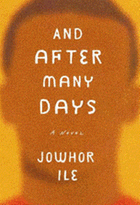
As Jowhor Ile's debut novel, And After Many Days, opens, 17-year-old Paul Utu leaves his home in the city of Port Harcourt, Nigeria, to visit a neighborhood friend. When night falls and he still hasn't returned, his mother and father mask their unease with optimism, assuring themselves he'll be back any minute, or at least by morning.
Paul fails to appear the next day or the day after that, leaving his parents and his younger siblings--brother Ajie and sister Bibi--in a state of disbelief and confusion. "They sensed something had gone wrong, but it was new, whatever it was, so no one knew how to hold it properly." The exemplary firstborn, Paul had never given his parents a reason to worry.
Rather than unfolding And After Many Days as a traditional narrative, the chapters are vignette-like. Together they create a portrait of a loving family. The day of Paul's disappearance dawns like any other, with no hint of the disastrous turn it will take.
Outside the Utus' happy home is a country with a tumultuous legacy of political and social strife--corrupt officials pocketing bribes, flare-ups between ethnic communities, riots, student demonstrations and false arrests. A native of Nigeria, Ile draws on real-life history and events to create a searing tale that juxtaposes the greater landscape of a nation in turmoil with one family's personal loss, rendered through characters that are distinct yet familiar. At the novel's heart is a universality that transcends time and place: the loss of a child and the wrenching toll it takes on the loved ones left with the unfillable void. --Shannon McKenna Schmidt