

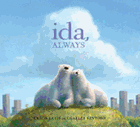
Gus, a polar bear who lives in "a big park in the middle of an even bigger city," always spends his days with his polar-bear friend Ida. Always. The two friends toss the ball, splash each other, chase and race. But one day Ida isn't there to play with Gus: "He heard her breathing, coughing, snoring" over by her cave. He waits patiently for her in their sunniest spot: "Snow monkeys and taxicabs screeched. Ice-cream trucks jingled. Still Ida didn't come." When Sonya the zookeeper tells Gus that Ida is sick and will die, Gus rushes to his friend. " 'Don't go,' he growled. 'Don't go, don't go... DON'T!' " Ida and Gus spend her last days wondering where she'll be after she dies, and whether she'll still be able to smell Gus's fishy breath: "There were growling days/ and laughing days/ and days that mixed them up."
Caron Levis (Stuck with the Blooz) was inspired to write Ida Always by a real pair of polar bears in New York City's Central Park Zoo, and in an honest and upfront manner, she gracefully reflects the complicated emotions of not only dealing with loss afterward, but living with the dying. In Levis's soothing narrative, Ida will always be with Gus, because, as Ida told him, "You don't have to see it to feel it." The polar bears are sweetly and expressively drawn, and the sky, clouds, shadows, sunshine and rain in Australian illustrator Charles Santoso's (I Don't Like Koala) softly luminous digital paintings all beautifully mirror the story's joy and sadness. --Karin Snelson, children's & YA editor, Shelf Awareness