

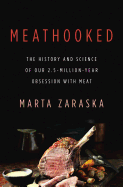
Polish-Canadian science journalist Marta Zaraska prefaces her history of humans eating meat by mentioning scientific studies of its harmful effects on health, the environment and (of course) animals, but Meathooked is more a fascinating story of our growing global consumption of meat than a political diatribe. What makes humans devour so many ribs and chops? What has us hooked on meat?
Quickly Zaraska moves along a historical timeline that includes the still-existent carnivore worm, prehistoric cephalopods and arthropods, and, finally, our African hominin ancestors, standing on two legs and drifting from a diet of plant fiber, seeds and nuts to their first taste of meat. Some might argue that it's been downhill from there, but Zaraska spends several chapters explaining the human biochemical need for protein, iron and vitamin B12, which meat readily provides. She takes us through the importance of genetics, taste, texture and scent to the evolution of meat eating. After all this science, Zaraska suggests that humans can certainly survive without meat--perhaps even survive longer--but there is something more than science to our craving for bacon and a succulent rack of lamb.
Zaraska explores the impact of the meat industry's subsidies, the developing world's desire to emulate the behavior of the wealthier West, the advertising juggernaut selling both the sizzle and the steak, and often-ineffective vegetarian movements. In the end, a more vegetarian diet might be best for humans and for Earth, but as Zaraska concludes: "The meat hooks are far too strong for that." --Bruce Jacobs, founding partner, Watermark Books & Cafe, Wichita, Kan.