

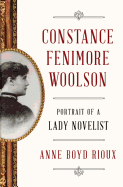
Nineteenth-century novelist Constance Fenimore Woolson is one of the lost figures of American fiction. In her lifetime she was recognized as an important writer, but today she is generally treated as simply a footnote in the life of Henry James--the woman he feared committed suicide because he did not love her. In Constance Fenimore Woolson: Portrait of a Lady Novelist, literary historian Anne Boyd Rioux (editor of Woolson's Miss Grief and Other Stories, reviewed above) reclaims both Woolson's life and her work for a modern audience.
Rioux successfully navigates the balancing act at the heart of any literary biography. She considers Woolson's literary works--six novels and dozens of short stories--within the context of her life, but never reduces Woolson's fiction to mere biographical illustration. The end result is a portrait of a complex woman who chose a literary career over family and domesticity--one of the first women who successfully created such a life. Rioux presents Woolson as a serious writer who strove to portray the pressures of convention on women's lives within the format of the realistic novel. Like her male peers, Woolson traveled extensively in Europe, was a familiar figure in American expatriate circles in England and Italy, and occasionally retreated into solitude when the need to write was strong. Woolson's relationship with Henry James appears less as a story of unrequited love and more as the most important example of her lifelong efforts to find intellectual companionship and respect from her male peers.
Constance Fenimore Woolson is an engaging combination of storytelling and scholarship. --Pamela Toler, blogging at History in the Margins