

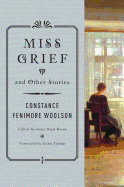
At the time of Constance Fenimore Woolson's death at the age of 53 in 1894, she had completed six novels and had published dozens of stories and poems in literary magazines such as the Atlantic Monthly and Harper's Bazaar. Her works were pioneering masterpieces of local color and were considered superior to those of any American writers at the time, including her friend Henry James. Yet, after her death, Woolson's reputation quickly faded, her importance overshadowed by her male contemporaries. Her biographer, Anne Boyd Rioux (Constance Fenimore Woolson: Portrait of a Lady Novelist; reviewed below), reintroduces Woolson with a sampling of stories that includes the acclaimed "Rodman the Keeper," written from the perspective of a Union soldier returning to the post-Civil War South as keeper of the national cemetery and caring for an ailing Confederate counterpart; "Miss Grief," in which an impoverished and talented female writer looks for validation from an established male writer (a veiled reference to Henry James); and "A Florentine Experiment," Woolson's successful attempt to emulate Henry James's analytical staple of manner above matter, but with feeling.
Rioux praises Woolson as a woman who mastered the complex, aloof style of her male contemporaries, yet managed to infuse flawed individuals with depth and humanity to "reflect what is deeply human in all of us, particularly our need to be loved, to be understood, and to belong." Like Jane Austen, Woolson's protagonists knew and understood their place within the rigid social ladder of acceptable convention, and her portraits are vivid, picture perfect snapshots of that time and place. --Nancy Powell, freelance writer and technical consultant